Role
Art Director, UX and UI Designer
Scope
Research, User Testing, Wireframing, Visual Design
Tools
Figma, Jira, Notion
Modernizing a high-traffic platform without losing users or performance.
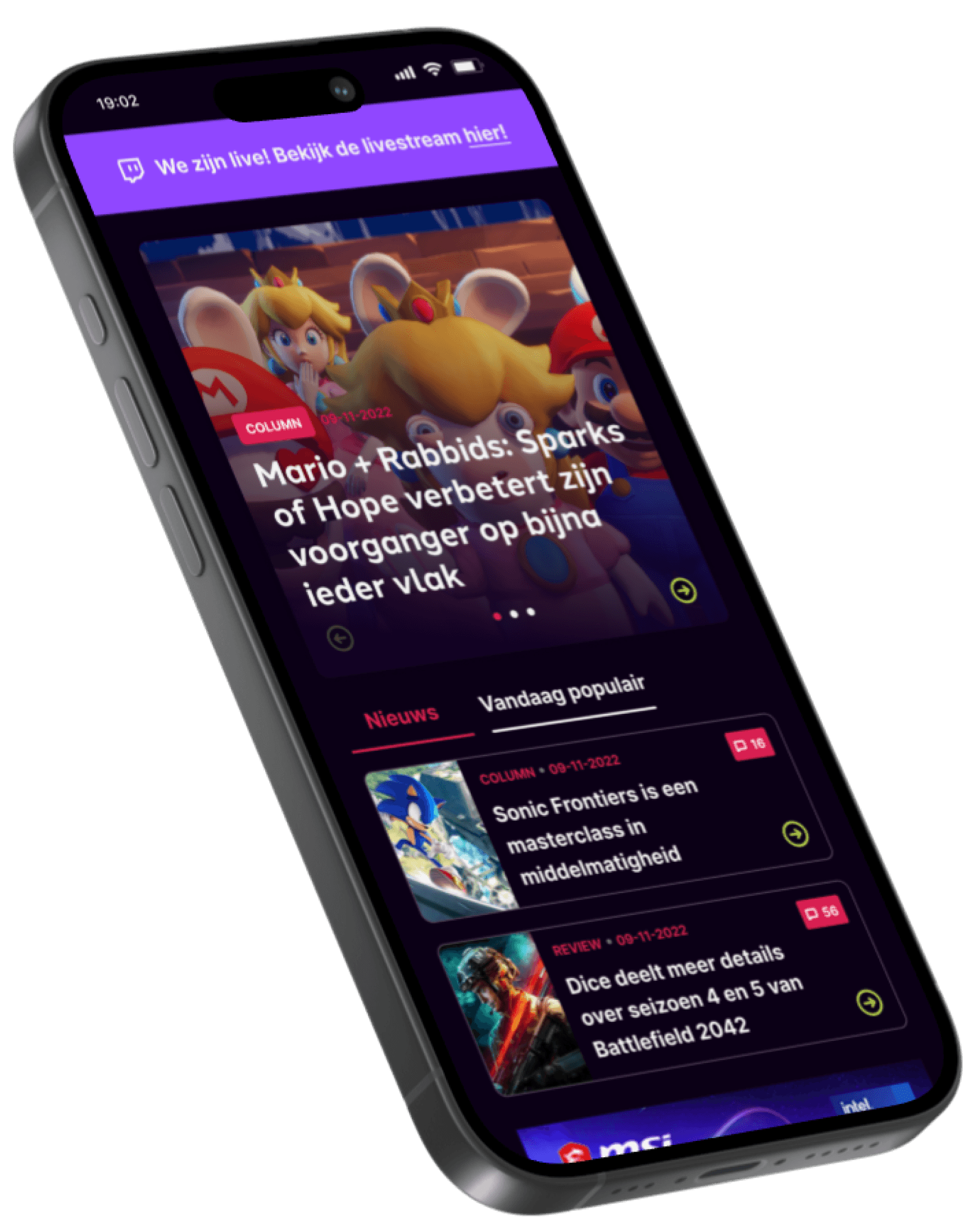
I led the redesign of Gamer.nl, one of the Netherlands’ largest gaming news platforms, as part of a full migration to a third-party headless CMS under Reshift, a digital publisher. The goal was not to “just” refresh the visuals, but to future-proof a platform without losing its soul, traffic, or community trust.
This project captures the last evolution of a platform that mattered deeply to its audience. More on that later in this case study.
What changed because of this work
Zero SEO and traffic loss during CMS migration
Dark mode shipped after years of user demand
Improved mobile readability and navigation
A design system flexible enough to power future brands
Strong positive reception from both community and editors
This was not only a cosmetic win. It was a structural and emotional one.
The problem behind the screens
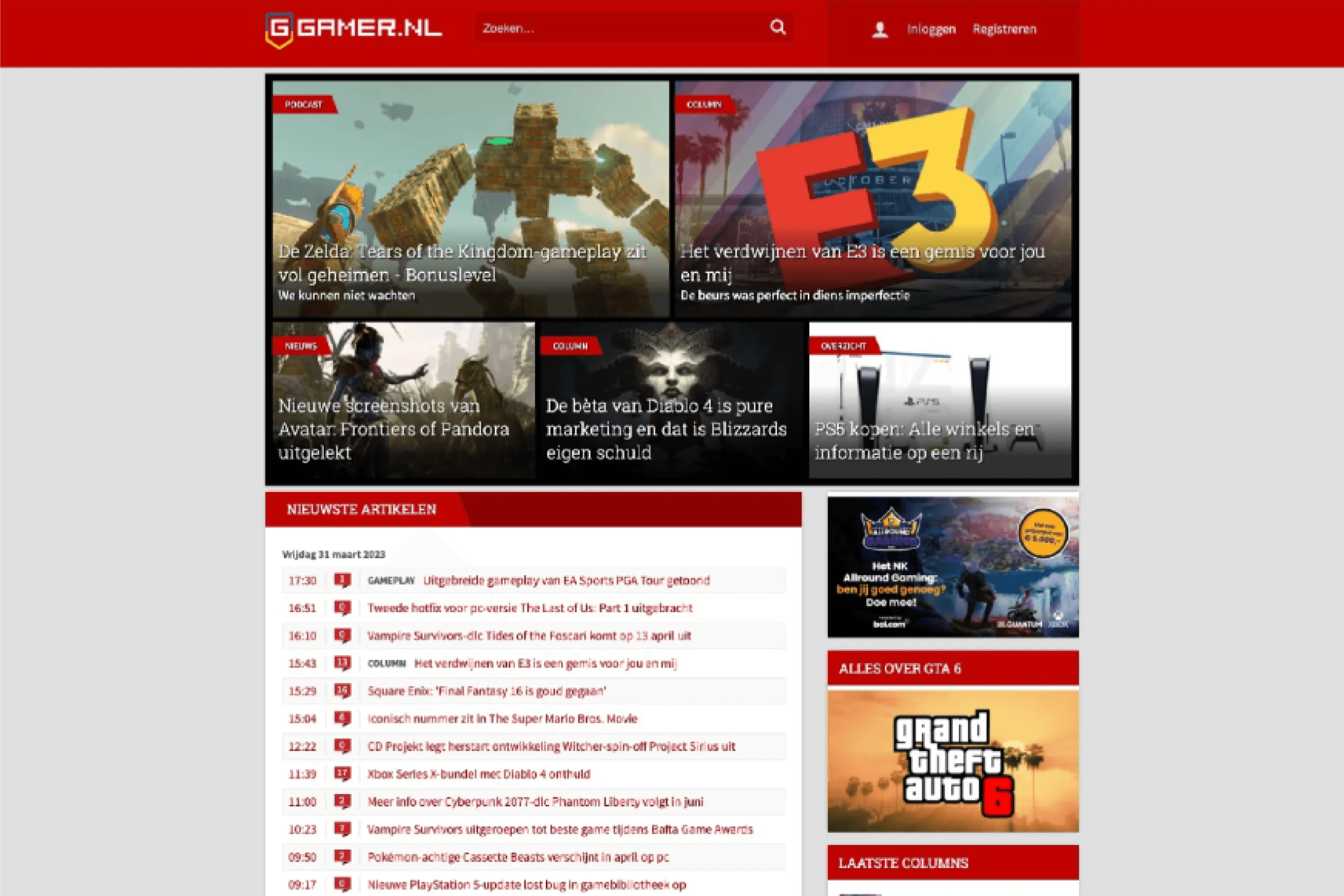
Gamer.nl had scale, loyalty, and history. It also had growing friction. Mobile usability lagged behind modern expectations. The existing CMS limited editorial flexibility. Ads dictated layout decisions instead of design intent.
At the same time, we could not afford disruption. Traffic had to remain stable throughout migration. The challenge was balancing progress with preservation.
Listening to the community
We started by grounding decisions in real feedback. Years of community comments and editorial notes were already available. The message was consistent. Dark mode was not a nice-to-have. It was overdue.
We launched a beta version and invited engaged community members to test it early. Their feedback surfaced concrete pain points around readability, hierarchy, and navigation. This input directly shaped priorities and removed guesswork from decision-making.
Feedback was partially collected by using “VideoAsk” by Typeform using interactive video shorts where one of the editors asked the research questions.
The homepage looks nice and clean, neat, and tidy. It's great that you can switch so smoothly between light and dark mode, both of which I find equally pleasant.
Much clearer thanks to more consistent tiles, but also more cluttered than the old homepage. I'll be a dark mode user as soon as possible, so it's great that this feature has been added, and it's easier to read!
When I use the profile button in the top right corner to access "Edit Profile," I have to move down and then left. In a straight line, so left and down simultaneously, the box jumps away.
Designing the direction
With clarity on user needs, I led ideation focused on restraint and usability. The vision balanced modern editorial aesthetics with familiarity. Mobile-first decisions guided layout and typography. Dark mode toggle became available. The intent was confidence, not novelty. A design that felt inevitable rather than experimental.
Structure before style
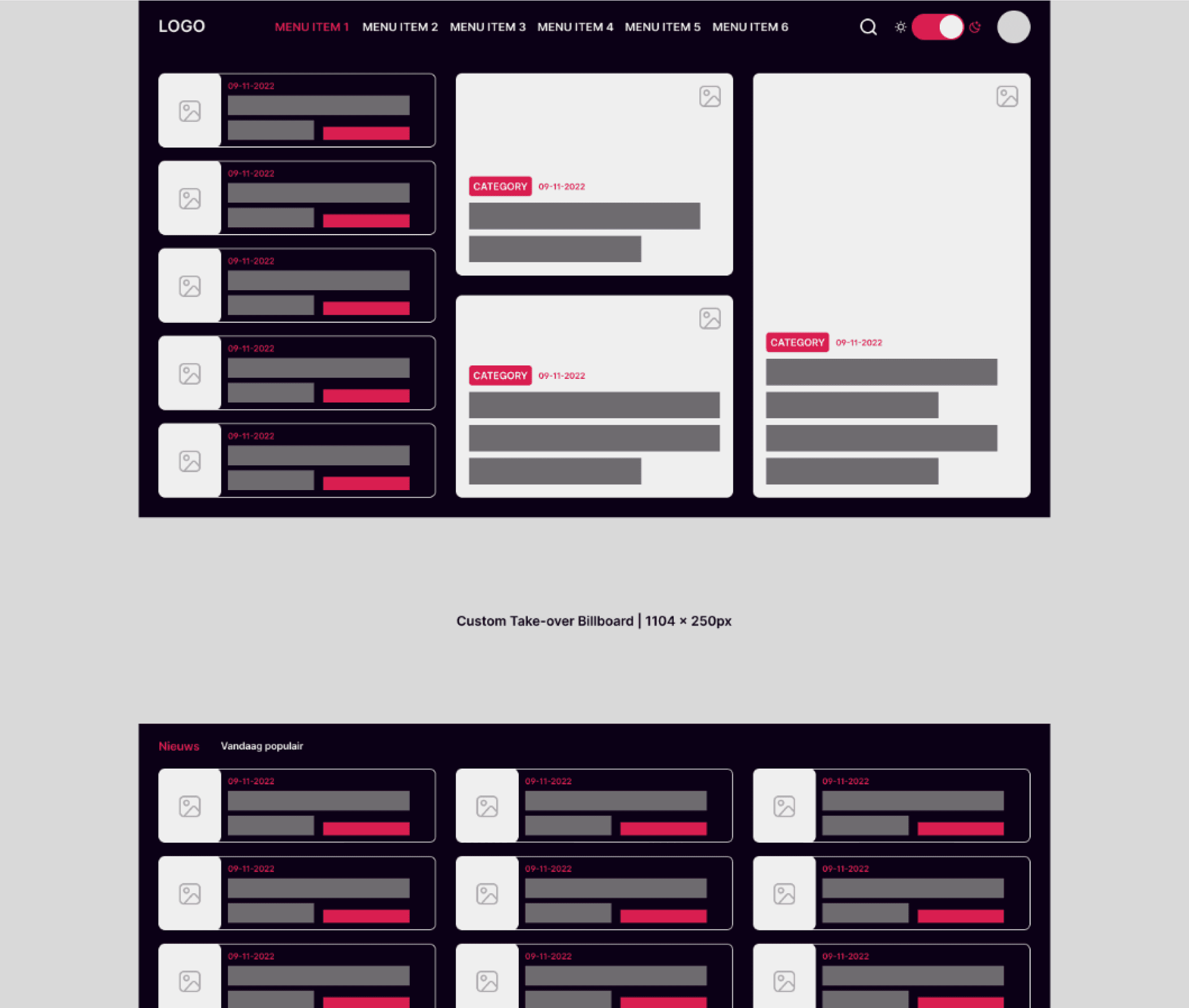
Given the clear direction, I moved directly into high-fidelity wireframes in Figma. Layouts were designed to support varied content types and heavy ad requirements without sacrificing readability.
A major constraint was the ability to display a so called “skin” on desktop (billboard + two full-height sides). Instead of compromising layout integrity to fit standard ad sizes, I collaborated with the ad provider to define a custom format that fit the system. Wireframes became alignment tools across product, editorial, and ad stakeholders.
Visual identity in motion
The visual design leaned into contrast and energy.
Optimized contrast in dark mode
A pink-to-red gradient accent for brand momentum
Typography optimized for long reads on mobile
Imagery that amplified the emotion of gaming culture
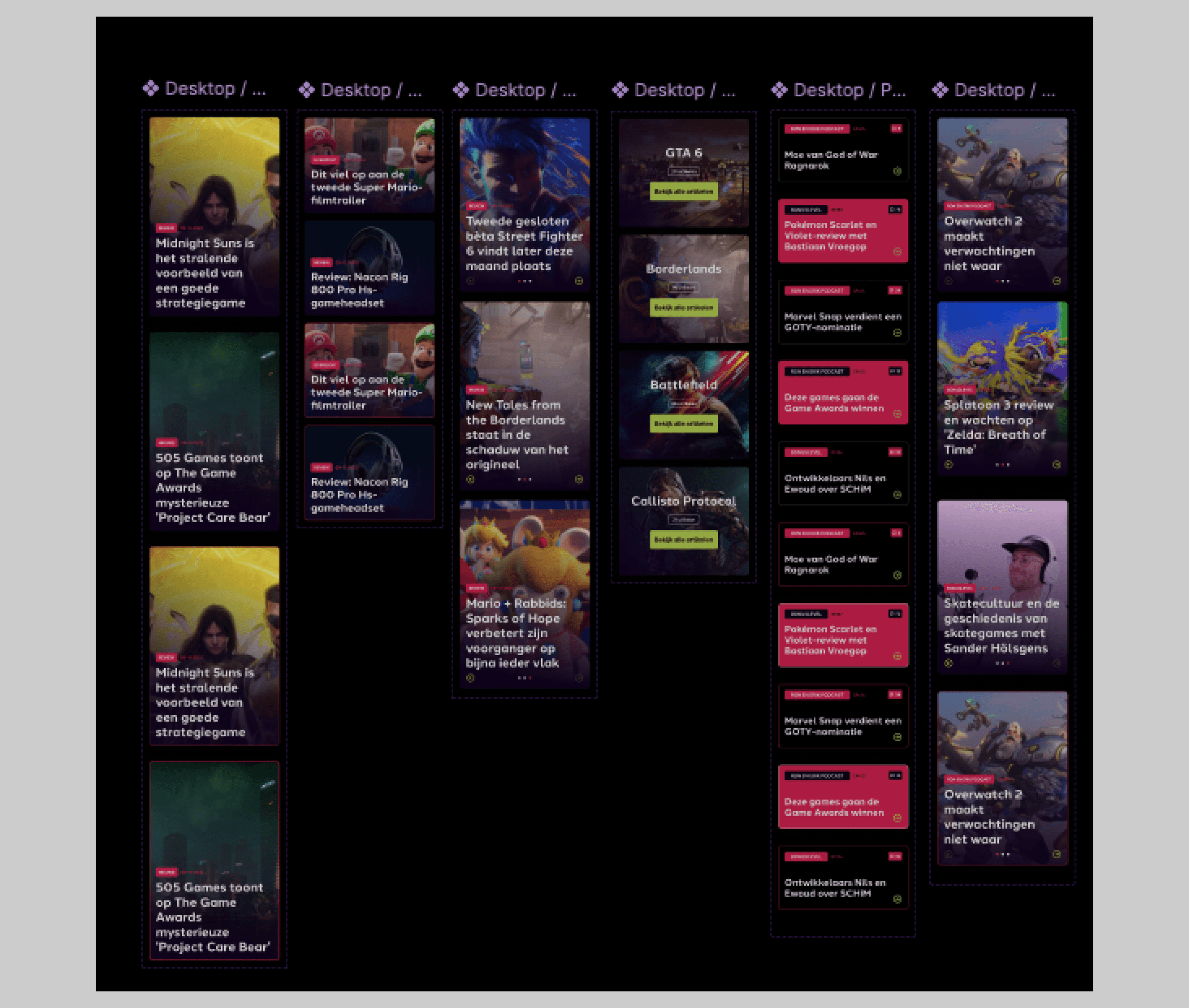
I applied Atomic Design principles for consistency while keeping all components on a single Figma page to iterate fast. This accelerated delivery but revealed a future improvement area in file organization.
Testing, then letting go
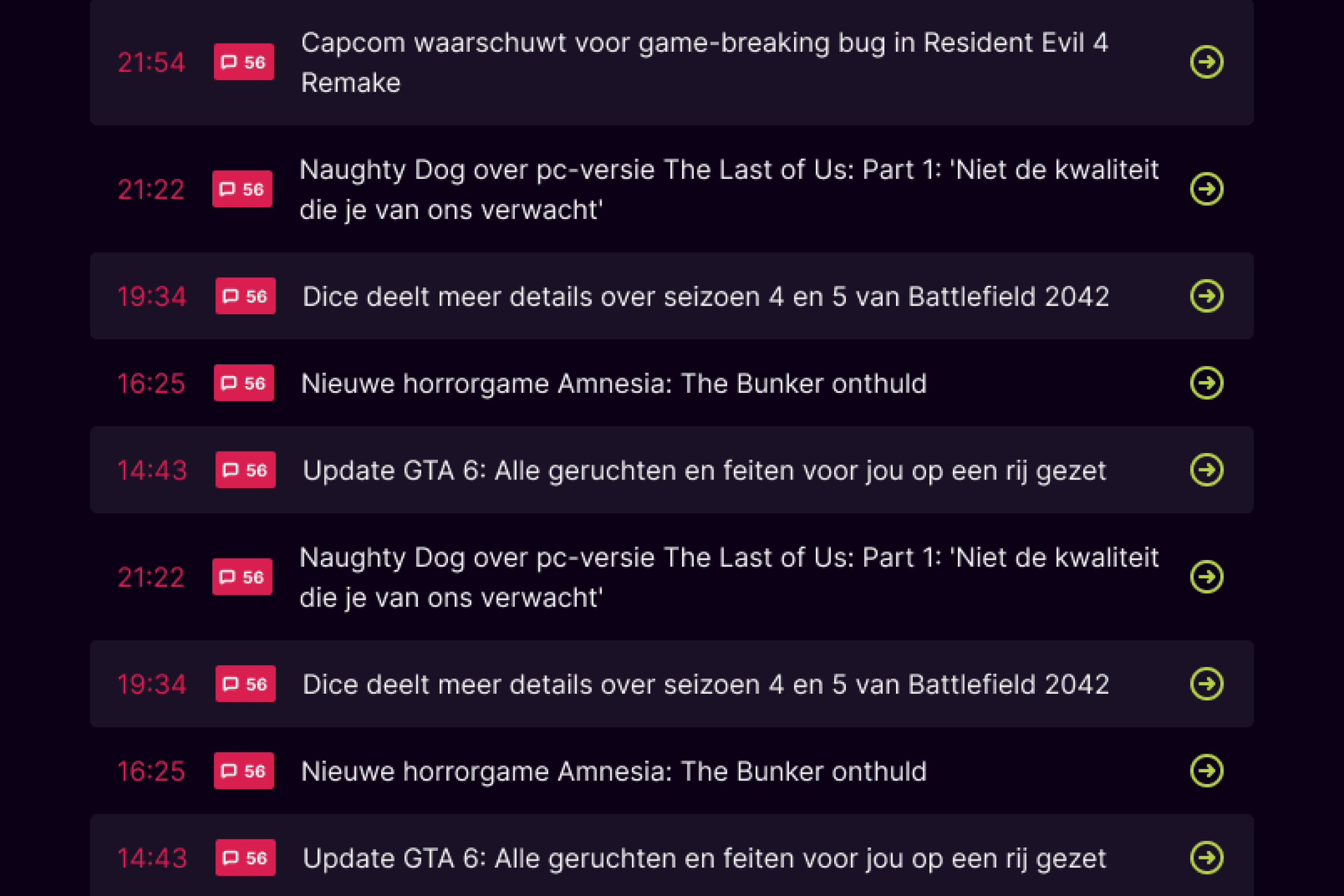
Post-design, we ran usability testing with both community members and editors. One key insight led to a decisive change. Card-based news layouts reduced scannability.
We reverted to a list-based structure that improved speed and comprehension. Feedback was grouped into UI and UX themes to prioritize fixes efficiently.
Iteration here was about subtraction, not addition.
A platform ready for the next chapter
The redesigned Gamer.nl launched cleanly.
Content migrated without SEO loss.
Mobile experience improved substantially.
Editors gained flexibility.
Users finally got dark mode by default.
Most importantly, the platform became adaptable. That adaptability later enabled the transition into Power Unlimited. This design outlived the brand it was initially created for.
The End of an Era
By 2026, Power Unlimited it was sold without its original team of editors and content creators. What remained was the system. This project represents the last deliberate evolution of a Dutch gaming institution, built with respect for its past and readiness for its future.
Design does not just shape products. It preserves moments in time.
Reflection
My personal learnings from this project:
Organize design systems for scale, not speed
Start usability testing earlier, even with rough prototypes
Treat community feedback as a design constraint, not input noise
These lessons directly shaped my approach in later projects.